
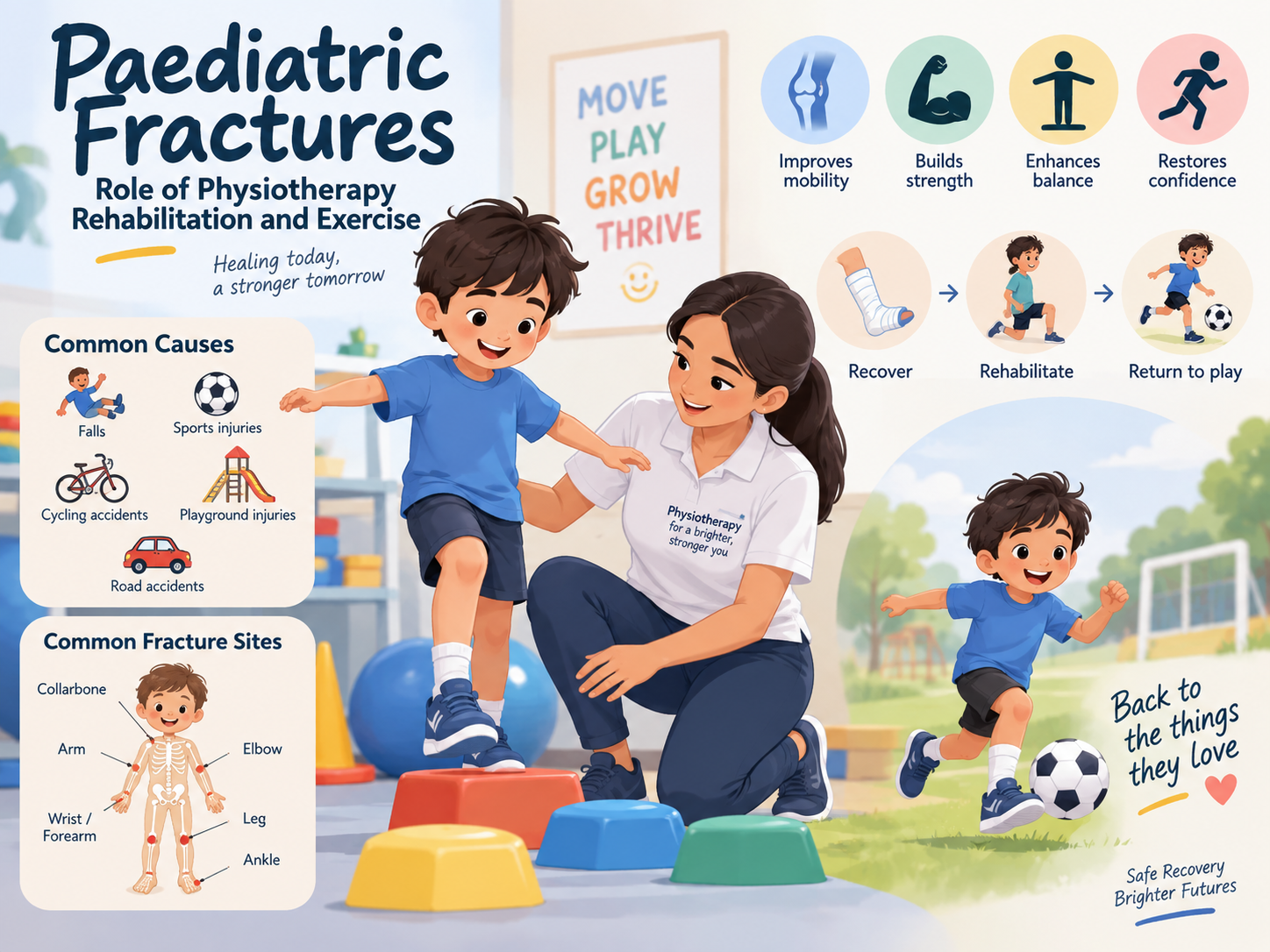
Kids get hurt. That's just part of being a kid who runs around, climbs things, rides bikes, and plays sports. Falls, playground mishaps, cycling spills, sports collisions, sometimes road accidents. Fractures happen.
The good news is that children's bones tend to heal faster than adult bones. But healing the bone is only step one. Getting a child back to full strength, coordination, balance, and confidence in the limb usually takes physiotherapy too, once the treating doctor gives the green light for rehab. And every child's plan should look different depending on their age, where the fracture is, how it was treated, and how healing is progressing.
A Quick Word on Paediatric Fractures
A paediatric fracture is simply a break or crack in a child's bone. Because kids' bones are still growing, there are some healing advantages, but there's also a catch: some fractures involve the growth plate, the area near the ends of long bones where growth actually happens. Growth plate injuries need proper medical evaluation because they can affect how the bone develops going forward.
The most common spots are the wrist, forearm, elbow, arm, ankle, leg, and collarbone. Treatment ranges from a simple cast to surgery for more complicated breaks. Once the bone is stable and the doctor clears movement, physiotherapy takes over to help the child get back to normal life.
Why Rehab Is Needed Even After the Bone Heals
After weeks in a cast, a child often deals with stiffness, weaker muscles, less flexibility, some swelling, and sometimes real fear about using the injured limb again. The bone might be healed, but the body hasn't caught up yet.
Physiotherapy works on rebuilding that gap safely. The general goals usually include:
- Getting the joint moving properly again
- Rebuilding strength
- Cutting down stiffness
- Improving balance and coordination
- Restoring a normal walking pattern
- Helping the child feel confident using the limb again
- Easing them back into school, play, and sport
The physiotherapist keeps adjusting the plan as the child progresses, which matters because kids heal and adapt at different speeds.
Early On, It's About Protecting the Bone, Not Pushing It
Right after a fracture, physiotherapy isn't about aggressive exercise. It's about protecting the healing bone while keeping the rest of the body moving. That might mean gentle finger movements if a child's arm is in a cast but their fingers are free, or light activity for unaffected areas if it's a leg fracture, always within whatever limits the doctor has set.
Getting the Joint Moving Again
Once the cast comes off, stiffness is almost guaranteed. Bending, straightening, or rotating the joint can feel hard or uncomfortable at first. This is where gentle range-of-motion work comes in — things like slowly bending and straightening an elbow or knee, gentle wrist movements after a forearm fracture, ankle movements post-immobilisation, or simple reaching tasks for upper-limb injuries.
Rebuilding Strength
Muscles around the injury tend to weaken during immobilisation, and kids sometimes avoid using the limb out of discomfort or plain fear. Once healing allows it, strengthening exercises come in gradually — things like light isometric holds, body-weight movements, resistance bands, sit-to-stand practice, step-ups, and controlled reaching or lifting.
For kids specifically, turning these into games makes a huge difference in how willingly they participate.
Balance and Coordination Aren't Optional Extras
Strength alone doesn't get a child back to normal activity. Balance, coordination, and body awareness matter just as much, especially after a lower-limb fracture. This might look like single-leg standing when appropriate, walking along a line, stepping drills, reaching while balancing, small obstacle courses, or ball games that double as coordination training. Kids tend to enjoy this part, which helps.
Getting the Walk Back to Normal
After a leg, ankle, or foot fracture, kids often develop a limp or start avoiding weight on one side, sometimes out of habit as much as pain. A physiotherapist looks at how the child is walking and works on weight shifting, step length, lower-limb strength, balance, and ankle movement. If the child was using crutches, the physio also helps guide the transition back to walking independently.
Making It Feel Like Play, Not Homework
Kids don't respond well to a rehab routine that feels like a copy-paste of an adult program. Younger kids usually do better with games, toys, colourful targets, or obstacle courses built into the session. Older kids might prefer sports drills or activity-based challenges. The goal is the same either way: keep them engaged while still hitting the medical goals.
Getting Back to School and Sport, Step by Step
Kids often feel ready for sport well before their bone and surrounding tissue are actually ready for that kind of load. That's why the return usually happens in stages:
Basic daily activity within the limits the doctor has set.
Gentle range-of-motion work to clear the stiffness left by immobilisation.
Gradual loading of the muscles and joints around the healed bone.
Everyday movements — walking, climbing stairs, reaching, carrying.
Activity patterns that mirror the demands of the child's actual sport.
Once medically cleared, a full return to school and sport.
How long each stage takes varies a lot from child to child.
When to Flag Something to a Doctor
Parents should stick to whatever the orthopaedic doctor has said about weight-bearing, cast care, and return-to-sport timing. If a child starts showing increasing pain, real swelling, numbness, colour or temperature changes in the limb, or worsening movement problems, that's worth getting checked properly and promptly.
Physiotherapy works alongside orthopaedic treatment, not instead of it.
The Bottom Line
Most paediatric fractures heal well, but full recovery is more than just waiting out the healing time. With the right rehab, kids can rebuild flexibility, strength, balance, coordination, and confidence, and get back to their normal routines without rushing the process. Every fracture and every child is different, so the plan should be too. With the right guidance and a bit of patience, most kids bounce back fully.
Help your child recover fully, not just heal
Our paediatric rehab plans are built around your child's age, injury, and stage of recovery.
Book an assessment →Tags: Paediatric Physiotherapy · Children's Fracture Recovery · Growth Plate Injury · Kids Rehab Exercises · Paediatric Orthopaedics · Fracture Rehabilitation · Return to Sport